
Power Electronics
Course fees:
Standard course fees : ₹47,200 (₹40,000 + 18% GST )
Register before April 19, 2026 to avail an Early Bird discounted fees of Rs.47,200 Rs.41,300(Rs. 35,000 + 18% GST)
Last Date of Registration : 07th May, 2026
- Course Description
- Profile of the Instructor
- Module Description
- Eligibility & Fees
- Certification
- Reviews (0)
Profile of the Instructor
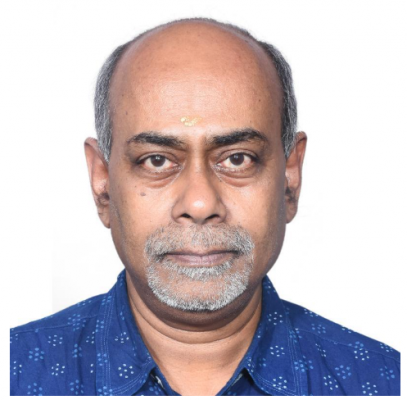
Mr. L. Kannan
Technology Director,
Centre of Excellence in Energy and Telecommunications (CEET), IIT Madras
Mr. L. Kannan has built motors and controllers for several applications including electric vehicles, industrial machines, power tools and domestic appliances. He approaches design from first principles, examining the interactions of different physics phenomena that impact the final performance, to develop solutions that are tailored for the target end-use. His lectures on this topic are popular among students,
faculty and industry professionals.
Module Description
Module 1: Power flow in an EV
Module Description:
Overview of the different sub-systems of the EV powertrain, and the power-conversions involved.
Concepts Covered:
- Electrical to Mechanical
- Mechanical to Electrical
- DC to AC
- DC to DC
- AC to DC
Learning Outcomes:
Appreciation of the importance of power conversion in the EV powertrain
Applications of this Module:
—
Module 2: The building blocks
Module Description:
The “bricks” of power electronic circuits and their characteristics
Concepts Covered:
- Resistors
- Inductors
- Capacitors
- Potential Dividers, Pull-up and Pull-down
- Filters
- Diodes
- Active Switches
Learning Outcomes:
A grasp of the foundational components that make up power electronic circuits.
Applications of this Module:
The learner is primed to appreciate how these components are combined to achieve different outcomes of power conversion
Module 3: Power in DC and AC
Module Description:
Understanding of power, and how it plays out in DC and AC circuits
Concepts Covered:
- Transient response of R, L and C
- Power Loss in Semiconductor Junctions
- Single-phase AC, Power Factor
- Three Phase AC: Star and Delta
- Pulse Width Modulation
- Harmonics
Learning Outcomes:
A grasp of how basic components can be combined to deliver different manifestations of power
Applications of this Module:
Ability to control power circuits by timing the switching of power
Module 4: Rectifiers and PFC
Module Description:
Conversion of AC to DC, power factor correction (PFC)
Concepts Covered:
- Half-wave and full-wave rectification
- Ripple control
- Power Factor Control
- Pulse Controller
Learning Outcomes:
Ability to convert AC power into low-ripple DC, without loading the input side with unfavourable power factor
Applications of this Module:
AC chargers
Module 5: DC-DC Converters
Module Description:
Conversion of DC power from one voltage to another, to cater to different sub-systems
Concepts Covered:
- Volt-sec balance, Charge balance
- Analysis and design of Buck/Boost Converters
- Design Walk-through
- Sepic Converter
- Isolated Converters
Learning Outcomes:
Ability to source power from a single DC source and supply it at different voltages matched to the needs of other sub-systems
Applications of this Module:
DC converters that cater to the varied power needs of different circuits and components in the system
Module 6: Inverters
Module Description:
Conversion of DC power to AC
Concepts Covered:
- Hex-bridge converter
- VVVF converter for motors
- Design Walk-through
- Grid Tied Inverter
Learning Outcomes:
Drawing power from a DC store (battery) to supply AC output in the form of single or three phase power
Applications of this Module:
- Three-phase power for motors
- Single-phase power to push into the grid
Module 7: Current trends
Module Description:
Emerging technologies in power electronics
Concepts Covered:
- V2G, V2A, V2V
- Multi-level convertor
- X-in-1 Convertor including OBC
- Wireless Charging
Learning Outcomes:
Overview of novel developments in the domain
Applications of this Module:
Expanding envelope of application areas in power conversion
Eligibility & Fees
Eligibility :
Academic or experiential background in electric mobility
Intended Audience :
Students and Industry peoples
Course fees:
Standard course fees : ₹47,200 (₹40,000 + 18% GST )
Fees paid are non-refundable and non-transferable.
Register before April 19, 2026 to avail an Early Bird discounted fees of Rs.47,200 Rs.41,300(Rs. 35,000 + 18% GST)
Certification
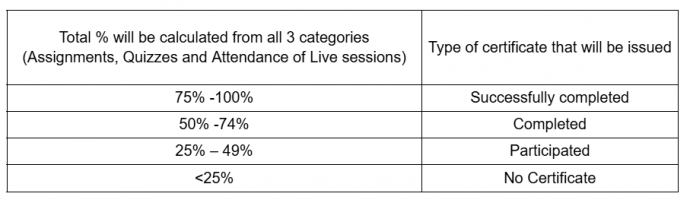
The Certificate criteria for this course are as follows:
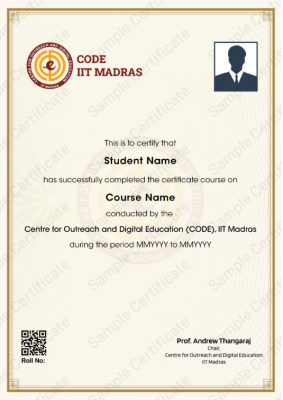
Course Certificate Template :
Reviews
There are no reviews yet.