Description
Understanding water quality is crucial in the face of numerous challenges, including climate change, anthropogenic effects on the environment, new-age microbes and chemicals, poor awareness on impact of water on health and inadequate or improper water purification. The objective of this course is to impart knowledge on fundamentals of water quality parameters and standards, theory of water quality measurements, use of appropriate methods and equipment, water quality surveys, and behavioral issues relating to water quality along with hands on measurements in the field with appropriate equipment, leading to building water professionals of tomorrow with a focus on innovation and service.
The course is divided into two parts: theory and practice. The theory classes may be delivered online or offline. The practical component will be completely offline and will involve training and sample collection for the analysis of water across different geographies, generating valuable data on water quality.
Participants will engage in four week-long interactions with citizens to assess their water quality, conducting measurements that contribute to the creation of ‘People’s Water Data’, along with surveys on water quality, to understand cultural, economic, and behavioural aspects affecting water quality. The data collected will be available online for future analysis and evaluation. Water quality kits will be provided to these students and they will be trained in conducting independent analysis, under the supervision of trainers. The data collected will be evaluated independently for their reliability. While this course is designed for anyone interested in the water sector, a background in science may be helpful.
The course will be delivered through lecture modules, assignments, discussions, practical exercises and field measurements over a four-month period. Evaluation will assess the comprehension of theory and the application of understanding through measurements, with assignments and analysis forming part of the evaluation process. Six institutions have collaborated to create this course and the modules will be delivered by eminent water experts and scientists.
Understanding the concepts, data and field realities is expected to kindle an entrepreneurial interest in them.
By the end of the course the learners will be able to:
Identify the major contaminants in drinking water and their impact on health
Understand water quality (WQ) standards across the world and in India
Learn ways of measuring major WQ parameters
Design a field measurement of WQ
Overlap the data with geospatial information
Learn the concept of hydro informatics
Measure WQ parameters in the field
Develop a survey and incorporate the data on online platforms
Model the data generated and assess their use
Profile of the Instructor(s)
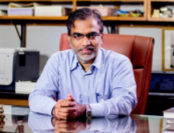
Prof. Thalappil Pradeep is an Institute Professor at IITM. He has trained over 300 graduate, masters, and postdoctoral students to do original research and thousands of others in different branches of science and engineering through classroom teaching. He is an author of 7 books, 550 papers, and 120 patents. He has built seven start-up companies. His technologies on clean water have reached 13 million people. He is a fellow of all the science and engineering academies of India, The World Academy of Sciences, the African Academy of Sciences, and the American Association for the Advancement of Science. He has received prestigious recognitions such as the Padma Shri, VinFuture Prize, and Eni Award, among others.
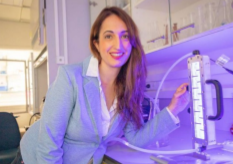
Prof. Hadas Mamamne is a head of the Environmental Engineering Program and the Water-Technology Laboratory at the School of Mechanical Engineering, Tel Aviv University, Israel. She specializes in advanced water purification and disinfection. Committed to sustainability, she pioneers point-of-use technologies to provide safe drinking water in low-income areas. As a visiting faculty at IIT Madras, she actively contributes to the development of water treatment technologies. Embracing off-grid solutions, her team explores UV-LED technologies as an innovative alternative to mercury lamps. Furthermore, she conducts smartphone-operated surveys to assess water quality in rural Indian communities.

Prof. Ram Fishman is a Professor of Development Economics at the Department of Public Policy, Tel Aviv University, and directs the Nitsan lab for sustainable development. His focus lies in bridging Israeli innovation with low-income users in developing countries. Specializing in sustainable agriculture, water scarcity, and climate change, he employs field work, experiments, and data analysis. Formerly an assistant professor at George Washington University and a post-doctoral fellow at Harvard Kennedy School, Ram holds a Ph.D. in Sustainable Development from Columbia University. His research interests span Sustainable Development, Food, Water, Energy, Climate Change, Agriculture, and Technology Adoption.
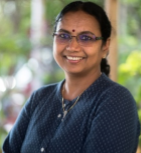
Prof. Ligy Philip, IIT Madras Chair Professor, excels in Civil Engineering. A Fellow of the National Academy of Engineers (FNAE) and the Royal Society of Chemistry (FRSC), she holds a Ph.D. from IIT Kanpur. Her research spans industrial effluent treatment, bioremediation, innovative drinking water processes, and sustainable waste management. Recognized globally, her tech solutions benefit industries and NGOs. As a pollution control consultant, she aids global sanitation projects with organizations like the Bill and Melinda Gates Foundation. Serving on expert committees for the National Green Tribunal and pollution boards, Prof. Philip executes socially impactful projects, implementing sustainable water and waste management in five villages.
Dr. G. Velmurugan, a Scientist at KMCH Research Foundation, Coimbatore, India, holds a Ph.D. from Madurai Kamaraj University and underwent training at Cologne University (Germany), IIT Madras, & University of Florida (USA). Specializing in the interaction between chemicals and microbes in diverse environments, especially water, he researches into its implications on ecosystems and human health. Recognized with the Young Investigator award from the Association of Microbiologists of India and the International Society for Microbial Ecology, Dr. Velmurugan's perspective revolves around microbiota. His team aims to leverage microbiota for addressing global challenges, including water pollution, climate change, and human diseases.
Eligibility & Fees
Participants must have background in science at some stage in their academic preparation. Final year B.E./B.Tech., M.E./M.Tech, M.Sc./M.A., Ph.D. and equivalent students may join.
Exempt for IITM students
a. Registration for theory: Rs 1180 (Rs 1000 + 18% GST)
- Theory Sessions: Rs.1000 + 18% GST (payable now)
- Practicals and Consumables: Rs.4000 + 18% GST (payable later, after 2 months)
Certification
To qualify for certification, participants must meet the following criteria: regular attendance, complete all assignments satisfactorily, and achieve a passing grade in the end-semester exam. The overall minimum percentage required for certification is 65%. The final decision regarding certification rests with the course coordinator.
Course Schedule
Last day of registration: 31th January, 2025
Course Duration: Commencing January 27 – Ending April, 2025
Session Days : Monday, Wednesday, Friday
Session Timing : 05:00 p.m. – 05:50 p.m. (IST)

Prof. P. Gurumoorthi –
Very nice initiative to fulfill the mission of Jal Jeevan
Abhishek kumar –
The course has been designed very intelligently to cover the most important aspects of water through both theory and practical sessions, guided by pioneers and legends in their field.
The mission of this course is to create comprehensive data to ensure clean water for all.It is such a global dream.Keep dreaming,as it’s The only way to change the 🌍
Sudhir S –
was in the first batch of this course. As a non-chemist, I initially thought I couldn’t keep up with it, but the way the lecture was conducted was excellent. Anyone from any background can easily understand the importance of water quality in drinking water. The main highlight of this course was the practical session, during which I learned a lot. I would say this is a must-take course for all water enthusiasts.
Dr. P.Amaravathy –
As a coordinator of the course of the previous batch, I feel proud of the journey we had undertaken together. The students can understand the detailed exploration of the concepts like pH, turbidity, dissolved oxygen (DO), alkalinity, hardness and microbiological parameters. The students can get the hands on experience on water sample collection in the field, laboratory testing techniques and interpretation of the results. So I can say that this course not only enhance academic understanding but also prepare the students for professional roles in environmental science, public health, or water resource management. Many industrialists and software employees also had joined the course last time and enjoyed the field experience. So it is like joyful learning.
Sritha S –
The theoretical sessions were informative and the practical sessions offered us hands on and a great experience of teamwork and collaboration.
Anubhav Mahapatra –
Course structure is well planned and bring the most important resource knowledge to the audience. Theory along with going into fields to collect water quality data will help the tomorrow by increasing awareness regarding precious water. Good course for the different age group people.
Niranjana.V SS16 –
Water is life, Yet, for millions, it still remains out of reach. Clean water means healthier lives – It is a basic human right.
It is important that each & every one of us know about our source of water, quality of the water we intake & the pollution we cause due to our daily activities.
I took this excellent course “Hybrid course on Water Quality: An Approach to People’s Water Data”. The unique feature of this course is that it offers both theoretical knowledge & you can also work on the field!.
Learnings from the course I wish to highlight:
1. Water Quality Parameters – Physical, Chemical characteristics was explained clearly by Prof Ligy Philip.
2. Microbial Diversity in Water: Prof Velmurugan வேல்முருகன் emphasized on One Health. Focus should not be only on human welfare but also microorganisms as we are all interdependent. All microbes are not disease causing & there is a need to conserve the microbial diversity. He also shared the strategies to combat antimicrobial resistance.
3. Pesticides, Emerging Contaminants such as PFAs, microplastics, Heavy metals (Arsenic in water), Trace elements, Hydro informatics were expressed excellently with examples by Prof Thalappil Pradeep.
4. Water Quality Standards, Guidelines & Enforcements, Instruments for measuring water quality parameters, Disinfections, Waste water contamination was discussed in detail by Hadas Mamane 🎗️.
5. Lab methods, Field test kits & practical course was well-planned and handled by coordinators Suzan Kagan, Ramya Dwivedi & Sudhir S.
6. Lastly nothing can be truly solved without including the social aspect, the people, communities & the day to day challenges one faces in getting clean water & raising awareness to treat the water & check for its safety prior to consumption was brought to light by Prof Ram Fishman.
I wish to thank all the Professors for offering this course.
This course helped me to make a real impact by contributing invaluable data & be part of a mission to ensure clean water for all.
#MAKING #HISTORY #WITH #PEOPLES #WATER #DATA.