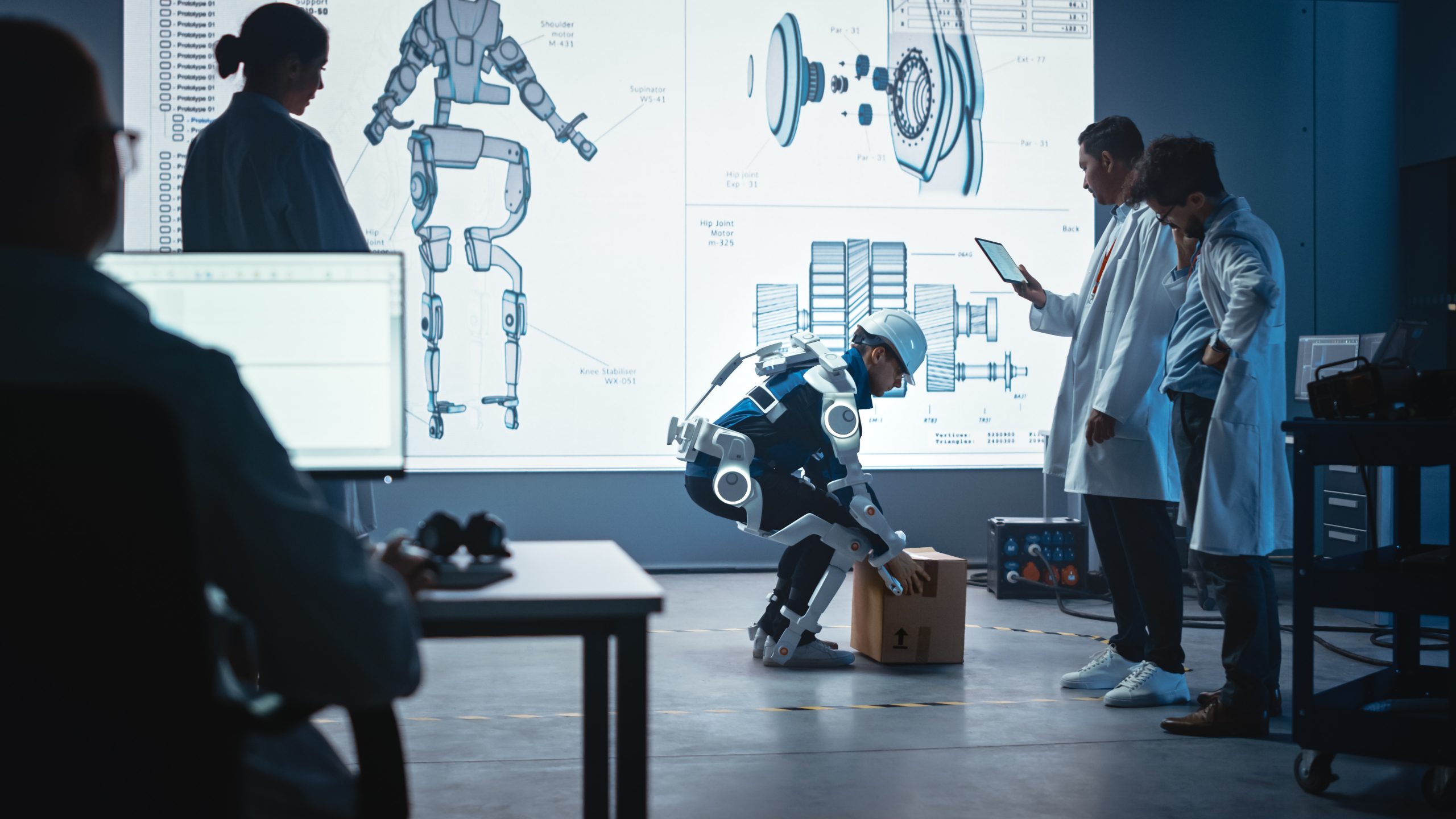
Designing Robot Locomotion Controllers Using Deep Reinforcement Learning

From: 200.00

Last date of Registration : 27th May, 2026

SKU: Date of workshop - 30th May, 2026 Categories: , ,

Description of the workshop

This workshop provides a comprehensive, hands-on experience in designing deep
reinforcement learning (RL)–based control strategies for robot locomotion using
MATLAB® and Simulink®. Participants begin by creating a Deep Deterministic Policy Gradient (DDPG) RL agent, including the design of actor and critic deep neural networks, configuration of network hyperparameters, and specification of agent-level options. Next, participants construct the RL environment by defining observations, actions, and reward signals that govern the agent–environment interaction. The agent is then trained using customizable training options, and its performance is evaluated through closed-loop simulations within the environment. In the final step, participants compare the performance of the trained DDPG agent with that of a Twin Delayed Deep Deterministic Policy Gradient (TD3) agent in achieving the robot locomotion control objective.

Profile of the Instructor(s)

Ms. Sragdhara is an online content developer at MathWorks focused on developing Simulink-based learning content. She holds a PhD degree in Control Systems. Her research areas include robust control, multirate control, cooperative control of multi-agent systems, decentralized control, and control of cyber-physical systems. She has published papers in international journals and conferences in the domain of her research. She is also an AI enthusiast and is currently exploring the applications of machine learning and deep learning in the areas of signal and image processing, and developing course content.
Ms. Shanthi is an experienced educator and online content developer at MathWorks, specializing in MATLAB for advanced signal processing and AI applications. With a master’s degree in Signal Processing, she brings deep technical expertise in Digital Signal Processing (DSP), Image Processing, Adaptive Filtering, Wireless Communication Systems, and the application of Neural Networks to signal and image data. Her scholarly contributions include publications in international journals on topics such as Video Compression Standards and their implementation in MATLAB, and Background Subtraction Techniques in Image Processing. She is skilled in algorithm development for signal enhancement, noise reduction, feature engineering, and real-time data analysis, with a strong command of MATLAB toolboxes for signal, image, and communication processing. At MathWorks, she creates engaging, practical online courses that help learners apply MATLAB to solve real-world signal processing and AI challenges.

Modules of the workshop

Module name Concepts covered Recorded videos - number of hours

Live sessions - No. of hours

Assessment Learning outcomes
Introduction NA Live Session
5 minutes
NA NA
Getting started with MATLAB Online NA Live Session

10 minutes

NA NA
Engineering Problem Statement and approach to solve. Brief overview of reinforcement learning (RL)

RL-based control approach used to address the engineering problem

Live Session

10 minutes

NA Describe the RL-based control strategy to solve the engineering problem.
Create critic and actor networks for a Deep Deterministic Policy Gradient (DDPG) agent Modeling a critic network for a DDPG agent

Modeling an actor network for a DDPG agent

Live Session

minutes

NA Create and configure the actor and critic neural networks for a Deep Deterministic Policy Gradient (DDPG) agent by specifying appropriate network architectures and training options.
Create the DDPG agent Creating a DDPG agent from actor and critic networks & agent-specific options Live Session

15 minutes

NA Create a DDPG agent by configuring agent‑specific options and integrating the defined actor and critic networks.
Create the RL environment Specifying observation signals provided by the environment (a biped robot simulation model) to the agent.

Specifying action signals returned by the agent to the environment

Live Session

minutes

NA Create the observation and action specifications and the RL environment object.
BREAK
Model reward function and termination criterion Modeling an appropriate reward function.

Modeling an appropriate episode termination condition.

Live Session

20 minutes

NA Model appropriate reward functions and episode termination conditions based on the RL environment.
Train agent Reinforcement learning training options

Training a DDPG agent

Live Session

10 minutes

NA Train a DDPG agent by specifying appropriate reinforcement learning training options.
Validate the performance of the trained agent Evaluating the performance of a trained DDPG agent Live Session

20 minutes

NA Simulate a trained DDPG agent in a closed‑loop reinforcement learning environment and evaluate the simulation results to determine whether the control objectives are met.
Compare agent performances Compare the performance of the trained DDPG agent with that of a trained Twin-Delayed Deep Deterministic Policy Gradient (TD3) agent in achieving the robot locomotion control objective. Live Session

15 minutes

NA Compare the performance of trained DDPG and TD3 agents in achieving the objective of robot locomotion control.
Summarize NA Live Session

5 minutes

NA NA
Q and A NA 10 minutes NA NA

Session Details

Date of the Workshop : 30th May, 2026

Timings (IST) : 10:00 a.m. – 01:00 p.m.

Mode of the Workshop : Online

Fee for the Workshop

Students : Rs. 236/- ( Rs. 200 + 18% GST)

Faculty : Rs. 590/- ( Rs. 500 + 18% GST)

Industry Professionals : Rs. 1180/- ( Rs. 1000 + 18% GST)

Intended audience

Engineering students, researchers, and industry professionals working on
robotics, control systems, and AI-based control.

Eligibility

UG or PG engineering students, researchers, and industry professionals working on robotics, control systems, and AI-based control.


Prerequisites - Basic MATLAB and Simulink knowledge.

Certification Criteria

Attending the workshop is mandatory for certification.

Reviews

There are no reviews yet.

Be the first to review “Designing Robot Locomotion Controllers Using Deep Reinforcement Learning”