

Profile of the instructor(s)

Dr. Somil Swarnkar currently holds the position of Assistant Professor in the Department of Earth and Environmental Sciences at IISER Bhopal. He has received the AGU Berkner Fellowship, the Global Challenge Research Fund Fellowship from the Royal Society UK, and the National Postdoctoral Fellowship from the SERB Government of India. He was awarded both his Master's and Doctoral degrees from IIT Kanpur. Furthermore, he has held a position as a National Postdoctoral Fellow (NPDF) at the Interdisciplinary Centre for Water Research (ICWaR) at the Indian Institute of Science (IISc) in Bangalore. Currently, he is conducting research on hydro-climatic extremes, human-water interactions, and basin-scale sediment modeling in the Ganga, Godavari, and Narmada River basins. He has written several significant papers in renowned scientific journals, with a specific concentration on hydrology and geomorphology in Indian river basins. He is presently overseeing two externally financed projects focused on the Narmada and upper Ganga basins. The Science and Engineering Research Board (SERB) and the Ministry of Education are providing funding for these initiatives, which are being carried out at the Indian Institute of Science Education and Research (IISER) Bhopal.
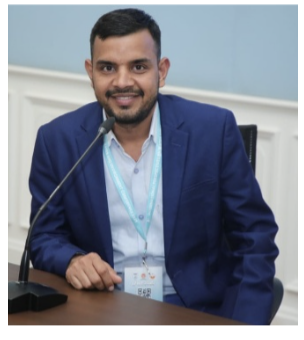
Dr. Vikas Poonia earned his B.Tech in Civil Engineering from M.D.U. Rohtak (2015), M.Tech in Civil Engineering (Water Resource Engineering) from MANIT Bhopal (2018), and Ph.D. in Civil Engineering (Water Resource Engineering) from IIT Indore (2022), where he researched “Droughts: Occurrence, Evolution and Impacts over India”. After his Ph.D., he served as a National Postdoctoral Fellow at IISc Bangalore and later on he served as postdoctoral fellow at Indiana University Purdue University, Indianapolis USA. In 2023, he joined NIT Calicut as an Assistant Professor. In 2024, he joined MANIT Bhopal as an Assistant Professor. His research focuses on Drought and heatwave monitoring, Compound flooding, Flash drought and forecasting, Climate change impact assessment, Extreme events, Risk and resilience assessment, Crop modelling, and he has secured two external project from ANRF, GoI, one from ICSSR, one from BMC Bhopal. He also organized a highly competitive one-week GIAN (Initiative of Ministry of Education) funding-INR 6,64,000, ANRF sponsored one-week short term training program and two self-financed one-week short term training programs, two times AICTE-QIP-PG certificate program for six months where funding sanctioned is INR 14 and 17 Lakhs, respectively.
Reviews
There are no reviews yet.