Description about the workshop
Jupyter Notebooks are a powerful and versatile resource for education. Notebooks have been used for a variety of topics in engineering, computer science, data science and machine learning, basic sciences, mathematics, etc. In the first part of this workshop, the general structure of a Notebook will be explained, along with several examples. Participants will learn how to create a new Notebook, how to execute cells of a Notebook, etc. The second part of the workshop will make use of Notebooks we have developed specifically for power electronics education. These Notebooks make use of the circuit simulator GSEIM (developed at IIT Bombay and available for free download). For teachers, we will suggest various ways in which our Notebooks can be used in teaching courses on Power Electronics. For students, we will show how the Notebooks can be used for self-learning.
Profile of the instructors
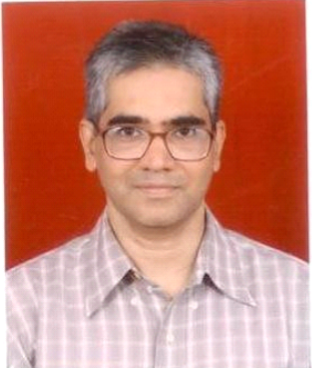
Prof. Mahesh B. Patil is a Professor with the Department of Electrical Engg, IIT Bombay. He has worked on circuit simulation. He has written two text books, one on Simulation of power electronic circuits, and the other on Basic semiconductor devices and circuits. He has developed an NPTEL MOOC on Basic Electronics.

Prof. Nakul Narayanan K is an Assistant Professor with the Department of Electrical Engineering, Government Engineering College Thrissur, Kerala.
Fees of the workshop
Students: Rs. 236 (Rs. 200 + 18% GST)
Faculty: Rs. 590 (Rs. 500 + 18% GST)
Intended Audience & Eligibility
Intended audience:
Teachers and students in Engineering colleges (Electrical Engg)
Eligibility:
Engineering college teachers with power electronics background, students who have taken a course in power electronics.
Certification Criteria
Attendance and Assignment are mandatory for obtaining the certificate.


Reviews
There are no reviews yet.